Hat Logo Methods Compared: Embroidery, 3D Puff, Patches and Printing
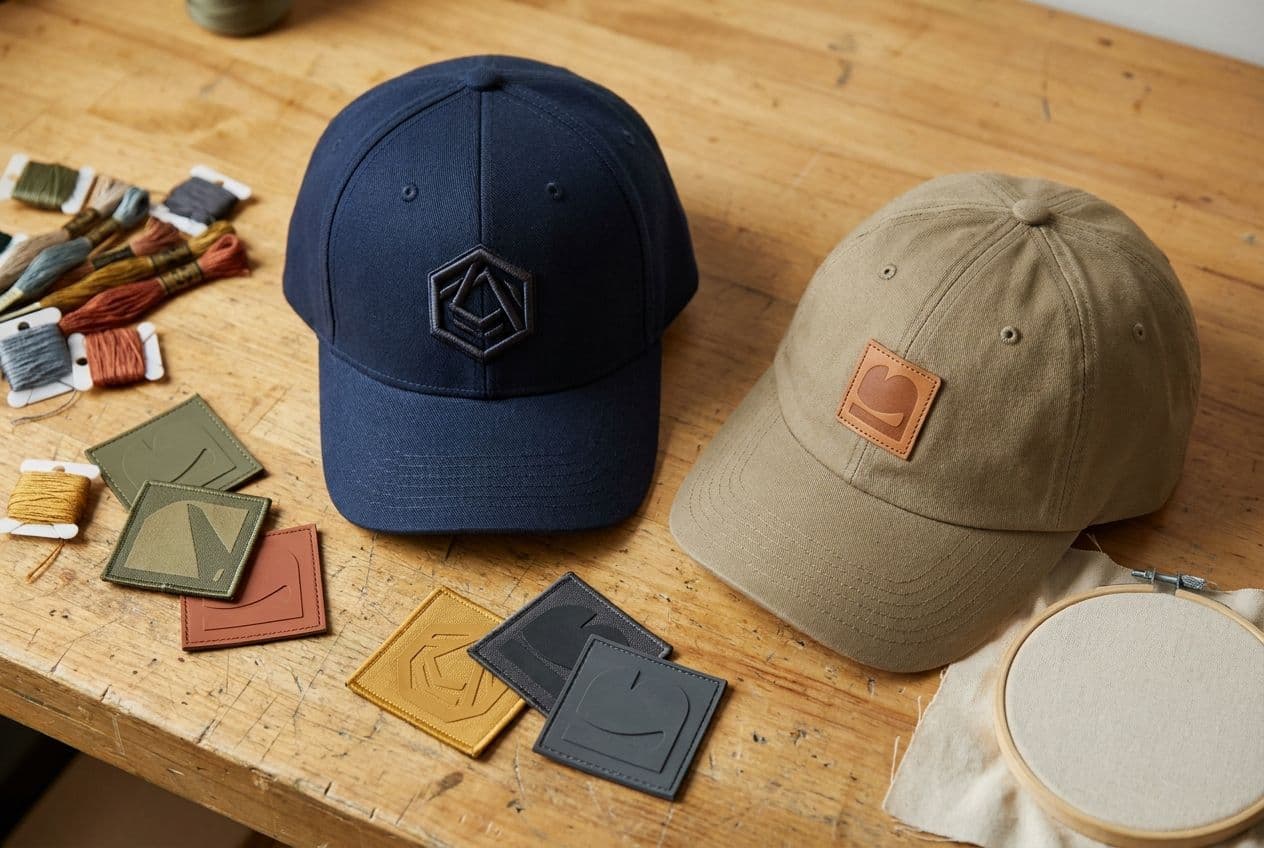
The logo is the reason most custom hats exist, and on a cap it is usually the first thing anyone sees. The decoration method also decides a lot more than looks: what the logo costs, how much detail it can hold, how it survives washing and sweat, and even which hat shapes it will work on. A 3D puff logo that looks sharp on a structured six-panel cap can sag on an unstructured dad hat. A thick embroidered logo can dent the front of a straw hat. A stitched logo can weaken a lightweight perforated running cap.
This guide compares the decoration methods used on caps and hats and explains how to match each one to a hat style. Our broader guide to logo branding for bags and hats covers the three basic methods across both product types. This one goes deeper on headwear. If you have not yet settled the hat itself, start with how to spec a custom hat.
The Short Answer
For most cap programmes, use flat embroidery for the front logo by default, 3D puff embroidery when the front panel is structured and the logo is bold and simple, and a woven or leather patch when the logo has fine detail or the brand wants a heritage look. Printing methods earn their place on lightweight performance caps, all-over patterns and soft bucket hats. Straw and felt hats are usually branded on the band or with a patch rather than directly on the crown.
Methods at a Glance
| Method | Detail it can hold | Durability | Works best on | Watch out for |
|---|---|---|---|---|
| Flat embroidery | Medium | Very high | Almost all fabric caps and bucket hats | Fine text below about 5 mm |
| 3D puff embroidery | Low | Very high | Structured front panels | Thin strokes, small letters, unstructured fronts |
| Embroidered patch | Medium | High | Trucker caps, beanies, outdoor hats | Adds a step before assembly |
| Woven patch or label | High | High | Fine detail, small text, multi-colour logos | Flat look, not a raised one |
| Leather or PU patch (debossed or printed) | Medium | High | Dad hats, rope caps, felt hats, cowboy hats | Real leather adds sourcing and cost |
| Rubber or silicone patch | Medium | High | Camp caps, outdoor and streetwear caps | Moulded patches need a mould, quoted on enquiry |
| Screen print | High | Medium | Flat panels, corduroy and canvas caps | Cracking on high-friction areas |
| Heat transfer and silicone print | High | Medium to high | Performance and perforated caps | Stiffer feel on very soft fabrics |
| Sublimation | Very high | High | All-over prints on light polyester | Light-coloured polyester only |
Flat Embroidery
Flat embroidery is the default for good reason. The logo is stitched directly into the panel, so it does not crack, peel or fade, and it survives sweat, washing and years of wear. It works on cotton twill, corduroy, canvas, mesh-front foam panels, ripstop and most bucket hat fabrics.
Its limit is detail. Text and lines below roughly 5 mm start to merge once stitched, and gradients cannot be reproduced at all. Logos with fine type usually need simplifying, or the fine part can move to a woven label at the back or side. Cost is driven mainly by stitch count, so a large, densely filled logo costs more than a small outline logo.
3D Puff Embroidery
3D puff embroidery stitches over a foam layer, which raises the logo off the panel. It is the look most associated with structured baseball caps, and it gives a strong, retail-brand front.
It only works under two conditions. First, the front panel needs to be structured, with buckram or a similar stiffener behind it. On an unstructured dad hat, the soft front panel cannot support the raised stitching, and the logo tends to wrinkle and sag. Second, the artwork has to be bold. Puff needs wide, simple shapes and letters. Thin strokes and small lettering collapse, because there is not enough stitching to cover the foam cleanly. Many brands combine the two methods, with the main mark in 3D puff and a tagline or small text in flat embroidery beneath it. Our structured six-panel cap is the natural base for this.
Patches
A patch is made separately and then sewn or heat-applied onto the hat. That separation is its main advantage, because the patch can hold detail, colours or textures that cannot be stitched straight into a curved panel. It also adds a step before assembly, so approve the patch artwork early and the patches can be made while the hat sample is being approved.
- Embroidered patches have the texture of embroidery with a defined border. They are a classic choice for mesh trucker caps, beanie cuffs and outdoor hats.
- Woven patches and labels are woven on a loom, so they hold much finer detail and smaller text than embroidery. They are the right choice when the logo has small type or many colours and still needs to look premium.
- Leather and PU patches can be debossed for a tone-on-tone look or printed in colour. They suit dad hats, rope caps such as our rope golf cap, and felt hats such as our wool felt outback hat. PU gives a consistent finish and avoids the sourcing and price swings of real leather.
- Rubber and silicone patches give a raised, moulded logo with clean edges. They are popular on camp caps and streetwear, for example on our colour-block camp cap. A moulded patch needs its own mould, and the mould charge is quoted on enquiry.
- Metal patches and badges are used on cowboy hat bands and some premium caps. On the straw cowboy hat, a leather or metal patch on the band is the usual branding.
Sewn patches are the more durable option. Heat-applied (fused) patches are faster to attach and leave no stitching on the inside of the panel, but they rely on the adhesive bond, so they suit fashion and promotional caps better than hats that will be washed often or worn in heat. If durability matters, ask for the patch to be both fused and stitched around the edge.
Printing Methods
Printing is not second best on a hat. On some styles it is the right answer.
- Screen printing reproduces fine detail economically on flat panels such as corduroy and canvas, for example on our corduroy 5-panel cap. Each colour needs its own screen, so cost rises with the number of colours. On high-friction areas such as the brim edge, printed ink can crack over time.
- Heat transfer, silicone and reflective prints are the standard for performance caps. They are thin and light, they add no needle holes to technical fabric, and they keep the cap soft and fast-drying. On a laser-perforated performance cap, a heat-applied logo keeps the ventilated panels intact. Reflective prints add visibility for runners.
- Sublimation dyes the design into the fabric itself, so it can run across the whole crown, as on our all-over print cap. It only works on light-coloured polyester-based fabrics, and it is usually combined with a small embroidered or woven logo for the brand mark.
Matching the Method to the Hat Style
| Hat style | Front or main logo | Secondary branding |
|---|---|---|
| Structured six-panel cap | 3D puff or flat embroidery | Side embroidery, back-arch text, woven label |
| Unstructured dad hat | Flat embroidery or leather patch | Back strap tab, inner taping |
| Trucker cap | Embroidered or woven patch, or embroidery on the foam front | Back mesh left clear |
| Camp and five-panel caps | Woven, rubber or leather patch | Printed or woven label on the side |
| Performance cap | Heat transfer, silicone or reflective print | Printed sweatband |
| Bucket hat | Flat embroidery or woven patch | Brim label, printed lining |
| Beanie | Woven label or embroidered patch on the cuff | Pom-pom or hang tag branding |
| Straw hat | Band branding: woven or printed ribbon, leather or PU patch | Printed sweatband |
| Felt and cowboy hats | Debossed leather patch, metal patch or band | Printed sweatband |
The pattern is simple. The softer or more open the material, the more the logo should sit on something added to the hat, such as a band, a patch or a label, rather than be stitched or printed into the crown. Straw braid in particular does not take embroidery well, so straw hats are almost always branded through the band or a patch. If you are still choosing between styles, our guide to types of hats and caps compares them.
Placement Beyond the Front
Most of the brand's identity sits on the front, but secondary placements make a cap feel finished rather than promotional:
- Side panel: a small icon or flag in flat embroidery
- Back arch: text above the strap opening, usually flat embroidery
- Strap or closure tab: a woven or leather tab
- Under the brim: a print or a contrasting fabric
- Inner taping and sweatband: printed with your logo or pattern, which costs little and is noticed by the people who actually buy the hat
- Size or care label: a woven or printed brand label inside the back
Each placement is a separate decoration step and is priced separately, so a quote should list them line by line.
MOQ, Cost and Lead Time
Our sample MOQ is 1 piece and our bulk minimum is 200 pieces per style and colourway, whatever decoration you choose. Specialised patches made by a supplier, such as moulded rubber or custom metal badges, may have their own minimums, and we flag that on the quote. If you are splitting an order across colours, our guide to colourways and MOQ for custom caps explains how to plan it.
Cost is driven by stitch count for embroidery, by number of colours for screen printing, and by patch type and size for patches. A logo applied in two placements costs more than one larger logo in a single position. Lead time depends on the hat style more than the logo. Patches can be made while samples are being approved, so they rarely delay bulk if you approve the patch sample together with the hat sample rather than afterwards. Custom moulds and metal badges take the longest to prepare.
For an accurate quote, send a vector logo file (AI, EPS or PDF), Pantone references for any colour that must match, the placement and approximate size of each logo, and the hat style. We will recommend a decoration method as part of the quote, and every hat in our product range lists the logo options that suit it.
Frequently Asked Questions
What is the most durable way to put a logo on a cap?
Embroidery, either flat or 3D puff, because the logo is stitched into the panel and does not crack, peel or fade. Sewn woven patches and leather patches are similarly durable. Printed logos are less durable on high-friction areas such as the brim edge.
Can you do 3D puff embroidery on an unstructured cap?
It is not recommended. Puff embroidery needs a stiffened front panel to support the raised stitching, and on a soft unstructured front the logo tends to wrinkle and sag. On an unstructured cap, use flat embroidery or a patch instead.
Is a woven patch better than embroidery?
For detailed logos, yes. A woven patch holds much finer text and detail than direct embroidery, so it suits logos with small type or many colours. Embroidery gives a raised, textured look and is the more classic choice for simple, bold logos.
How do you brand a straw hat?
Straw braid does not take embroidery well, so straw hats are usually branded on the band, with a woven or printed ribbon, or with a leather, PU or metal patch on the band. A printed sweatband inside the hat adds a second branding point.
Does the logo method change the MOQ?
Not at our factory. Our bulk minimum is 200 pieces per style and colourway whatever decoration you choose. Some specialised patches made by suppliers, such as moulded rubber or metal badges, can have their own minimums, and we flag that on the quote.