Reflective Hats and Caps: A Manufacturing Guide to Fabrics, Trims and Logos
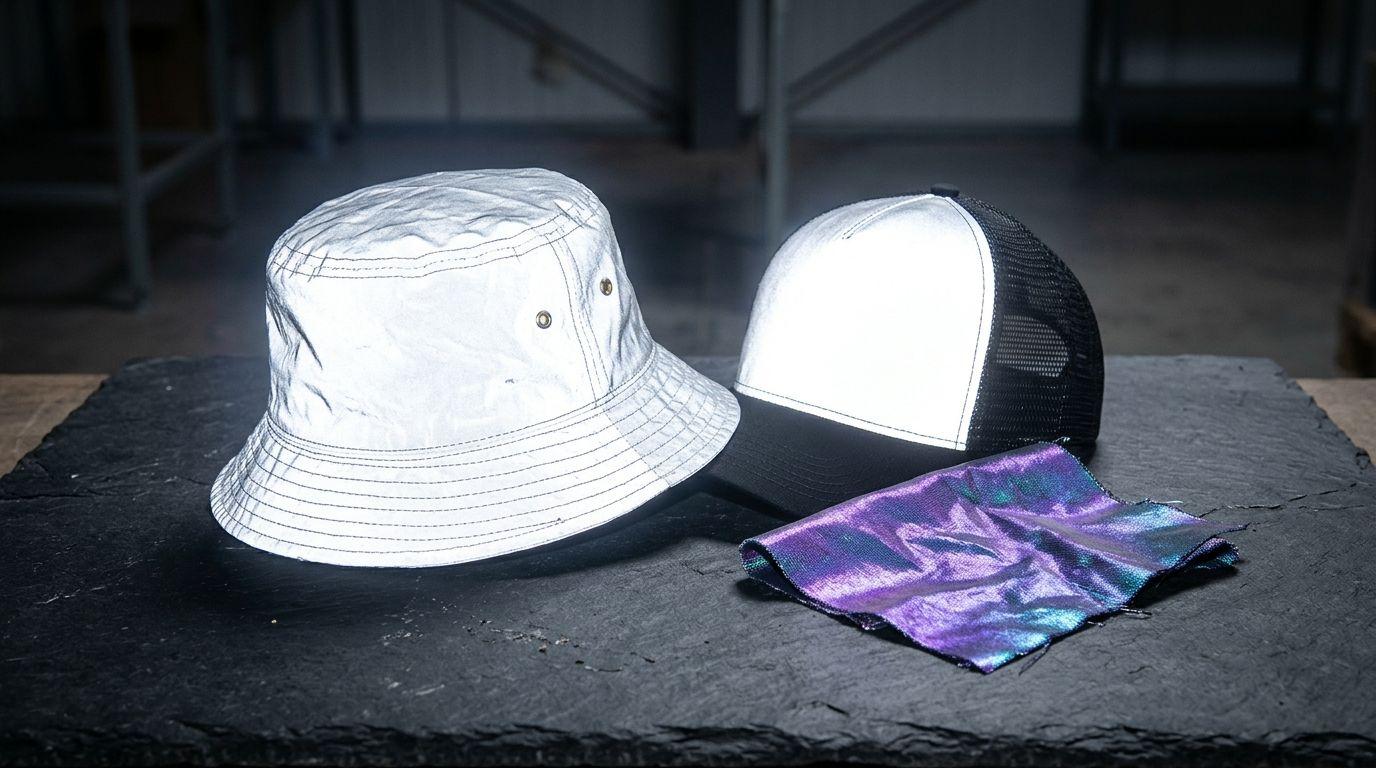
Reflective headwear serves two quite different buyers. Running clubs, cycling brands and road-safety campaigns want a cap that shows up in headlights; streetwear labels and festival merch teams want the flash-photo glow of an all-over reflective bucket hat. The sewing is similar, but the decisions about fabric, trims and logos are not. This guide explains those decisions from the factory side, so a brief can be right the first time.
Three ways to make a hat reflective
| Approach | What it looks like | Typical styles | Notes |
|---|---|---|---|
| All-over reflective fabric | Whole crown and brim cut in reflective fabric | Bucket hats, 5-panel camp caps | Strongest effect and highest fabric cost; seams and scuffs show |
| Reflective panels | Front panels and/or brim in reflective fabric, the rest in mesh or twill | Trucker caps, running caps | Balances visibility with breathability and cost |
| Reflective trims and details | Piping, brim binding, a strap tab, a sandwich brim edge or a reflective print | Performance caps, visors, beanies | Looks like a normal hat in daylight; small reflective area |
Our Reflective Bucket Hat uses the first approach and the Reflective Trucker Cap the second. Performance styles such as the Laser-Perforated Performance Cap and the UPF50 Running Visor take the third, with reflective trims or a reflective logo print.
Reflective fabric: what to specify
Reflective fabric for headwear is a woven base, usually polyester, coated with microscopic glass beads. Three things vary from one fabric to the next:
- Base and hand-feel — a thin, soft base drapes well in unstructured bucket hats; a firmer base holds the shape of a structured front panel without heavy buckram.
- Colour — standard silver-grey; black reflective, which looks dark in daylight but still lights up in a beam; and rainbow (iridescent) reflective, which shifts through violet, blue and teal as the light moves. Coloured reflective fabrics are less bright than silver, so if visibility matters more than look, stay with silver.
- Brightness grade — fashion-grade reflective fabrics are dimmer than safety-grade material. Ask which grade is quoted and compare swatches under a torch before approving.
Reflective fabric shows creases and needle holes more than cotton twill, so unpicking and resewing a sample leaves marks. That makes an accurate first sample more valuable than usual; our guide on how to spec a custom hat lists what to include.
Trucker caps: reflective front, breathable back
On a trucker, the reflective fabric usually covers the two front panels and the top of the brim, with polyester mesh behind. The points to decide:
- Structured front with buckram backing for a high crown, or a soft front for a low-profile running cap.
- Underbrim colour — a dark underbrim reduces glare for runners and drivers.
- Colour of mesh, eyelets, top button, brim binding and closure. Hi-vis yellow or orange mesh adds daytime visibility to the reflective front.
- Closure: a plastic snapback is standard; a buckle strap or elastic back suits running.
For the wider trucker choices — foam or twill fronts, crown heights, patch types — see our custom trucker hat buyer's guide.
Bucket hats: all-over reflective and reversible builds
A reflective bucket hat follows the same pattern as any bucket hat — top, side panels and brim — cut in reflective fabric, with the brim held by rows of parallel topstitching instead of an insert. A lining keeps the coated back of the fabric off the head. Options are cotton, polyester or mesh, or a reversible build with a plain or printed fabric inside, which gives the wearer a daytime side and a night-time side. Fabric, brim and sizing choices are covered in our bucket hat manufacturing guide.
Logos on reflective headwear
| Method | On reflective fabric | Notes |
|---|---|---|
| Flat embroidery | Works well | Strong contrast against silver; keep stitch density moderate so thin fabric does not pucker |
| 3D (puff) embroidery | Structured front panels only | Needs a backed panel; not suitable for unstructured bucket hats |
| Woven or PVC patch | Works well | The simplest way to add colour without covering much reflective area |
| Reflective heat transfer or print | Best on non-reflective panels and trims | On all-over reflective fabric it adds little contrast |
| Standard print | Possible | Ink sits on the bead coating; check rub fastness on the sample |
Every logo covers some reflective area, so on safety-focused products keep it compact. Costs and minimums for each method are compared in our hat logo decoration methods guide.
Care, durability and claims
Glass-bead coatings wear with abrasion, hot washing and tumble drying. Put "hand wash cold, do not tumble dry, do not iron" on the care label and in product listings. Do not describe a reflective cap as PPE, or as compliant with hi-vis garment standards such as EN ISO 20471 or ANSI/ISEA 107, unless the finished hat has been tested: a fabric supplier's test report covers the fabric, not the hat. If you need evidence for a programme, we can send finished samples to the lab you nominate.
Production, MOQ and lead time
Reflective hats run on the same cutting and sewing lines as our other caps. Inspection follows AQL, with the level and test items agreed with you; for reflective styles a torch or flash check of the reflective panels and a seam check on the coated fabric are added. Samples start from 1 piece and bulk from 200 pieces per style and colourway. Lead time is typically 15–25 days after sample approval, depending on fabric availability and decoration. Our audits and certifications — BSCI audit, ISO 9001, SEDEX and GRS — are listed on our credentials page.
Running a programme that needs bags as well? Sanjin Bag, our bag brand, makes reflective drawstring bags and commuter backpacks that can be specified in the same colours and reflective materials.