Quality Control 101: What Happens Before Your Bag & Hat Order Ships
Last updated: August 2026
When you can't walk the production floor yourself, quality control is the part of sourcing that's hardest to verify from a distance — and the part that matters most once the shipment lands. Here's a plain explanation of how bag and hat orders actually get inspected before they leave the factory, so you know what to expect and what to ask for.
In-Line Checks During Production
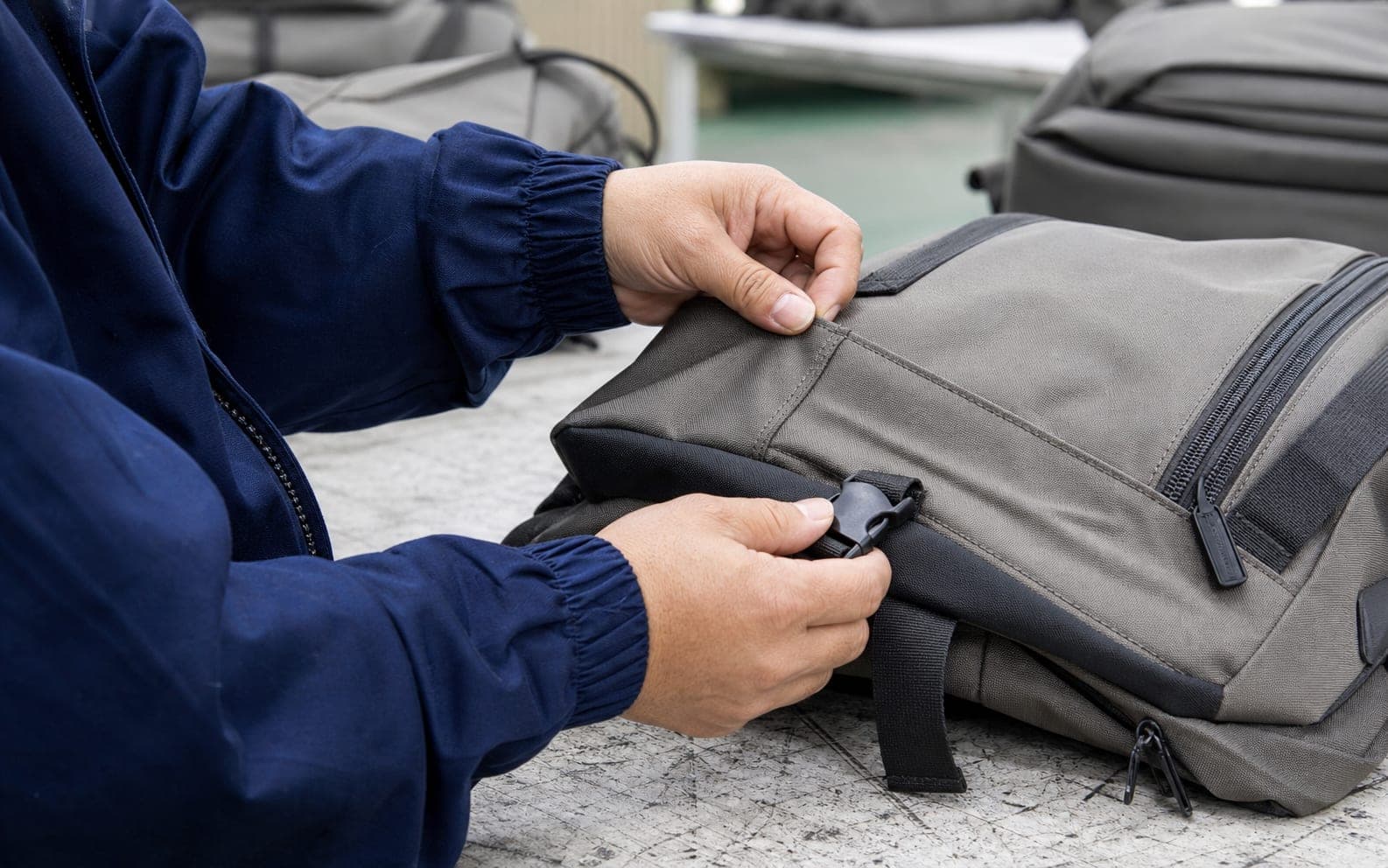
Good QC doesn't start when a box is about to be sealed — it starts while the product is still being built. On our lines, cutting is checked against the pattern before pieces move to sewing, and each sewing station spot-checks stitch density, seam allowance and hardware attachment (zippers, buckles, D-rings) before a bag or hat moves to the next stage. Catching a loose stitch or a misaligned strap here is far cheaper than catching it after 500 units are packed.
Pre-Shipment Inspection (AQL Sampling)
Once an order is finished and packed, most manufacturers — including us — run a final inspection using AQL (Acceptable Quality Limit) sampling, the same statistical method third-party inspection firms like SGS or Bureau Veritas use. Instead of opening every single carton, inspectors pull a random sample sized to the order quantity and check it against a checklist covering:
- Workmanship — stitching, seam strength, thread breaks, fabric flaws
- Measurements — dimensions, strap length, cap circumference against the approved spec sheet
- Hardware function — zippers pull smoothly, buckles snap and hold, adjusters slide without binding
- Branding accuracy — embroidery/print placement, size and color match the approved artwork
- Color and material consistency — matching the approved sample or Pantone reference, no visible shading between panels
- Packaging — correct polybag/carton, labeling, barcode placement, carton count matching the packing list
Each defect found gets classified as critical, major or minor, and the order is only cleared to ship if the total defects fall within the accepted limit for the sample size and AQL level used — the same pass/fail logic a buyer's own hired inspector would apply.
Measuring a Finished Piece
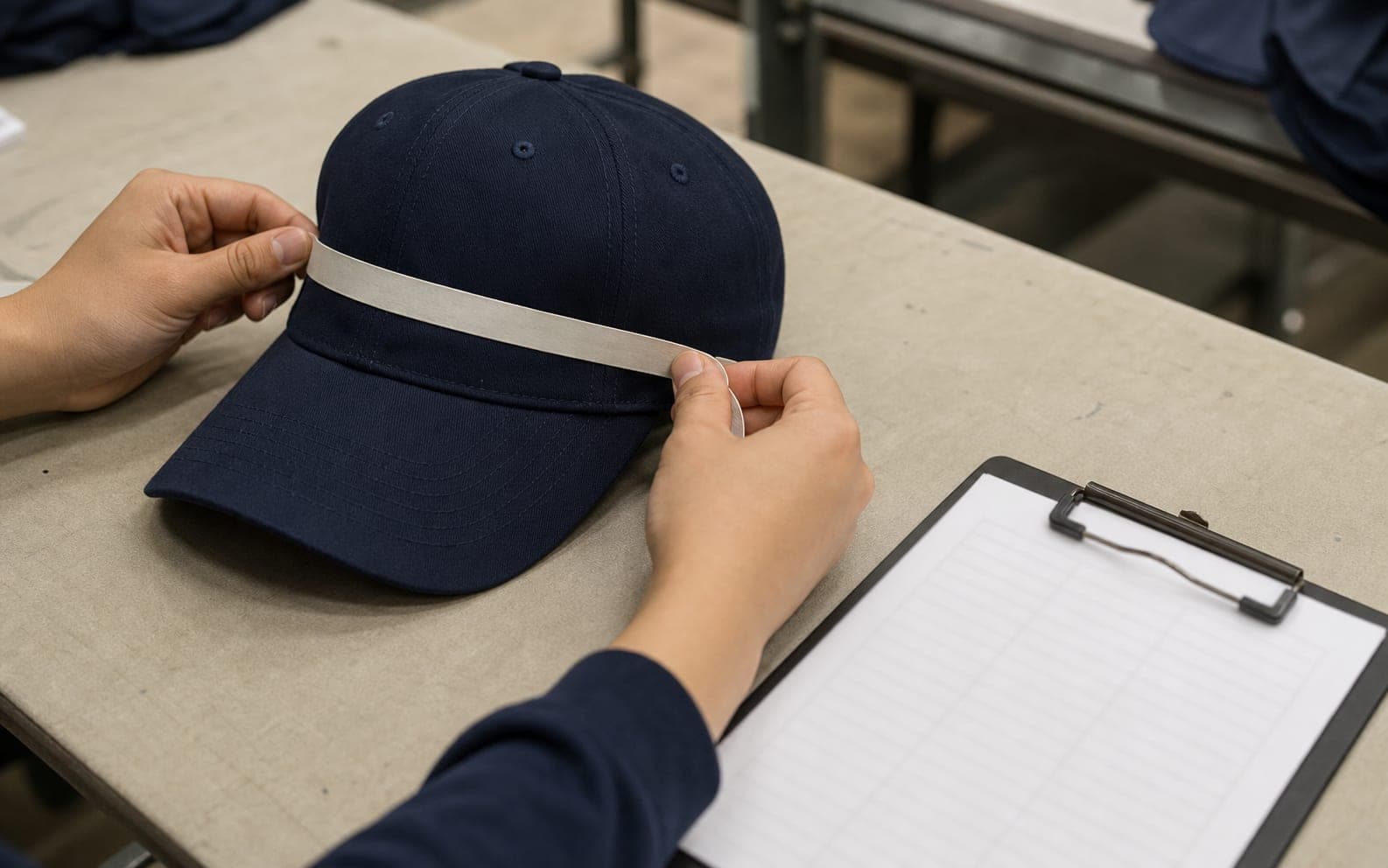
Measurement checks matter more for caps and hats than buyers often expect — a panel cut a few millimeters off spec, or a sweatband sewn slightly high or low, changes the fit even when the fabric and print look correct at a glance. Inspectors measure against the approved spec sheet or the confirmed sample, not just against "close enough," and flag anything outside the agreed tolerance.
In-House QC vs. Third-Party Inspection
Buyers often ask whether they should trust a factory's own QC or pay for an independent inspector. In practice, most experienced buyers use both — factory QC to catch problems early and keep production moving, and an independent inspection for larger or first-time orders as a second set of eyes before the goods leave.
| Factory In-House QC | Third-Party Inspection |
|---|---|
| Runs throughout production, catches issues early | Runs once, usually right before shipment |
| No extra cost to the buyer | Buyer books and pays the inspection firm directly (typically a per-day fee) |
| Familiar with the product and factory's own tolerances | Independent of the factory, no incentive to overlook defects |
| Good for repeat orders with an established track record | Recommended for first orders, large orders, or new suppliers |
If you want to bring in your own inspector, that's a normal request — just confirm the inspection date with the factory once packing is roughly 80% complete, so there's still time to fix anything flagged without missing the ship date.
Frequently Asked Questions
Can I request video inspection instead of an in-person visit?
Yes. A live video call walking through a sample of finished units and the packed cartons is a common substitute when a buyer can't travel or hasn't booked a third-party inspector, and it's normal to ask for this before final payment on a first order.
What AQL level should I ask for?
AQL 2.5 is the common default for general merchandise like bags and hats. Buyers with stricter brand standards sometimes ask for AQL 1.5, which requires a larger sample and a lower tolerance for defects — reasonable for premium or branded product lines, though it usually adds a little time to the inspection.
Who pays if a shipment fails inspection?
This should be agreed before production starts, not after. The usual arrangement is that rework or replacement of defective units is on the factory if the fault traces back to workmanship or materials, while changes requested after the spec was already approved are treated as a revision, not a defect.
Does QC add to the lead time?
In-line checks don't add time since they happen alongside production. A final inspection typically adds half a day to a full day at the end, and a third-party inspection needs to be scheduled in advance — worth building into your timeline rather than requesting it the day cartons are sealed.
Want to see how this applies to your own order, or line up an inspection window for an upcoming shipment? Get in touch and we'll walk you through it.